A Comprehensive Comparison for Embedded Systems
In the rapidly evolving world of IoT, automotive electronics, and industrial automation, selecting the right storage architecture is critical. Two of the most popular choices for embedded systems are eMMC and SD NAND. While both are based on NAND flash technology, their internal structures, interfaces, and performance characteristics differ significantly. As a leading industrial memory manufacturer, Nandstor helps engineers navigate these choices every day. This guide will break down everything you need to know about eMMC vs SD NAND to ensure your design remains reliable and cost-effective.
First, What is eMMC? (Embedded MultiMediaCard)
eMMC is a non-volatile memory system consisting of both flash memory and a flash memory controller integrated on the same silicon die. It simplifies the design process by managing low-level flash operations like error correction (ECC) and wear leveling internally.
- Best for: Mobile devices, smart homes, and high-capacity security surveillance.
- Key Advantage: High integration and standard BGA packaging.
Second, What is SD NAND?
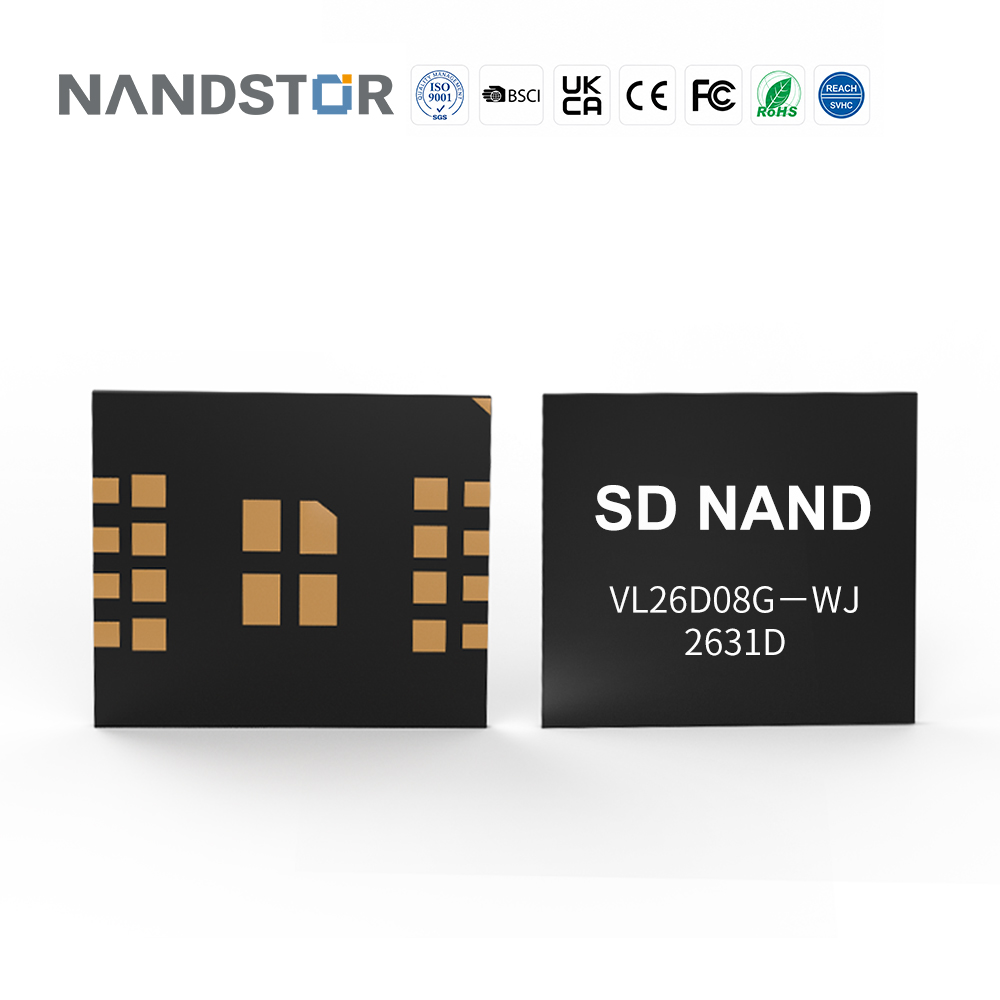
SD NAND is essentially an SD card in a chip package (usually LGA or WSON). It communicates via the standard SD interface, making it an ideal “plug-and-play” replacement for traditional micro SD cards in embedded designs where space is limited but standard protocol support is required.
- Best for: Industrial automation, medical devices, and smart meters.
- Key Advantage: Small footprint and easy integration with existing SD controllers.
Third, eMMC vs. SD NAND: Key Differences
Why Industrial Reliability Matters For applications in automotive electronics or security surveillance, data integrity is non-negotiable. Traditional consumer-grade SD cards often fail in harsh environments. This is where industrial-grade SD NAND and eMMC from professional manufacturers shine.
According to IEEE Xplore’s latest research on Flash reliability, the choice between SLC, MLC, and TLC NAND significantly impacts the Mean Time Between Failures (MTBF). At Nandstor, we specialize in high-reliability solutions designed for 24/7 operation.
In conclusion, Strategic Choice: Which One to Choose?
- Select eMMC if: You need high capacity (over 32GB), high-speed data transfer for OS booting, and have the PCB space for BGA soldering. Check out our eMMC product lineup for specifications.
- Select SD NAND if: You are working with a small-scale microcontroller (MCU) that supports SD protocol, need a smaller footprint (LGA-8), and require high endurance for logging small data packets. Explore our SD NAND solutions.
Whether you are designing the next generation of smart devices or upgrading industrial hardware, the choice between eMMC and SD NAND hinges on your specific performance and capacity requirements. Partnering with a trusted OEM/ODM storage manufacturer like Nandstor ensures you get the technical support and product longevity your project deserves.